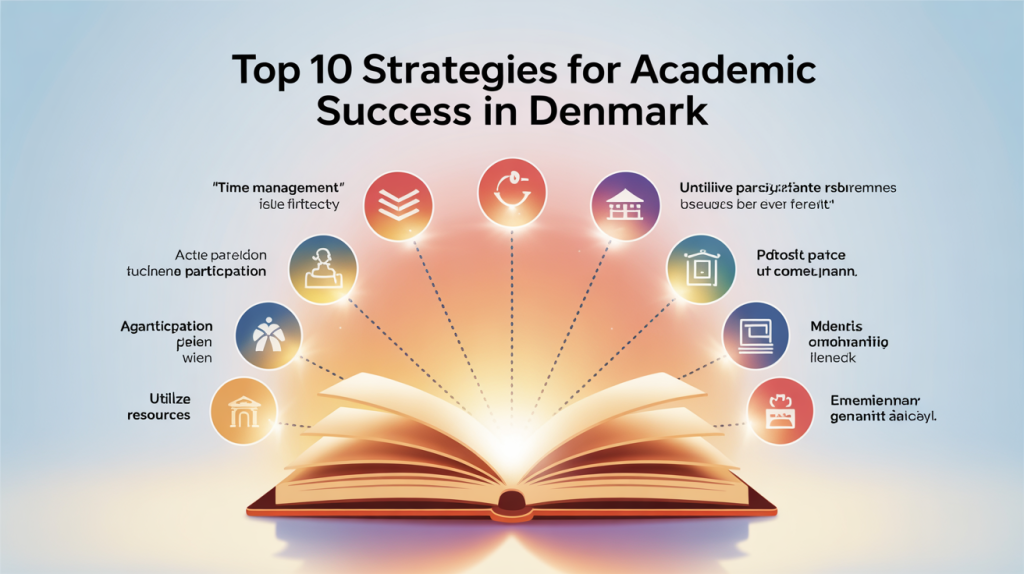
Top 10 Strategies for Academic Success in Denmark’s Competitive Environment
Quick Navigation
- 1. Understand Your Unique Learning Needs
- 2. Set Clear Goals and Objectives
- 3. Master Time Management
- 4. Engage in Active Learning
- 5. Leverage University Support Services
- 6. Develop Strong Academic Writing Skills
- 7. Embrace Group Work and Study Networks
- 8. Seek and Embrace Feedback
- 9. Maintain Mental Health and Work-Life Balance
- 10. Adapt to Danish Academic Culture
- Take the Next Step with Study in Denmark
1. Understand Your Unique Learning Needs
To excel academically in Denmark, first identify your personal learning style—be it visual, auditory, or kinesthetic. Recognizing how you learn best allows you to adapt your study methods accordingly. This customized approach not only boosts comprehension and retention of information but also aligns your study practices with the Danish educational expectations.
Action Step: Experiment with various study techniques and monitor their effectiveness to fine-tune your learning approach.
2. Set Clear Goals and Objectives
Establishing specific, measurable goals for each subject or semester is crucial for maintaining motivation and focus. Break these larger goals into manageable tasks, which will help guide your daily or weekly academic activities. Clearly defined objectives not only provide direction but also enable you to evaluate your progress effectively.
Action Step: Utilize goal-setting frameworks such as SMART (Specific, Measurable, Achievable, Relevant, Time-bound) to outline your academic objectives.
3. Master Time Management
In a culturally collaborative environment like Denmark, mastering time management is essential. Develop a structured schedule using calendars and productivity tools to organize your coursework and assignments. Prioritize urgent tasks and group projects, and consider breaking study sessions into focused blocks to prevent burnout.
Action Step: Implement time-blocking techniques and set specific periods for studying to enhance concentration and efficiency.
4. Engage in Active Learning
Danish universities thrive on active learning, emphasizing participation, group projects, and open debates. Engaging actively in discussions not only aids in the retention of knowledge but also fosters critical thinking—skills that are vital in today’s workforce.
Action Step: Participate in class discussions and collaborate on group projects to expand your understanding and assert your ideas in academic settings.
5. Leverage University Support Services
Don’t overlook the academic support services available at your university, including tutoring, writing centers, and counseling services. These resources are specifically designed to assist students in overcoming academic challenges and adapting to the rigorous demands of higher education in Denmark.
Action Step: Seek assistance proactively, particularly if you find yourself struggling with specific subjects or aspects of your coursework.
6. Develop Strong Academic Writing Skills
In the Danish academic setting, assignments must showcase clarity, originality, and precise citation standards. Strong academic writing is crucial, as it significantly impacts your grades and the impression you make on professors.
Action Step: Practice your writing skills regularly and seek feedback from professors and peers. Familiarize yourself with the citation styles preferred by your university.
7. Embrace Group Work and Study Networks
Collaboration is a fundamental aspect of education in Denmark. Forming or joining study groups not only enhances your learning experience but also helps you build a professional network. Engaging in peer learning provides additional support and diverse perspectives on course material.
Action Step: Organize regular study meetings with classmates, ensuring active participation from each member to maximize the benefits of collaborative learning.
8. Seek and Embrace Feedback
Actively soliciting feedback from your professors and peers can be invaluable for academic improvement. Openness to constructive criticism is crucial for refining your strategies and enhancing your overall performance.
Action Step: After assignments or presentations, request feedback and note areas for improvement. Use observations to adjust your academic approaches in the future.
9. Maintain Mental Health and Work-Life Balance
Balancing academic responsibilities with personal well-being is vital for sustained performance. Engaging in physical activities, maintaining social connections, and ensuring adequate rest can contribute to both mental and physical health.
Action Step: Incorporate breaks and leisure activities into your schedule to recharge, ensuring you remain focused and engaged in your studies.
10. Adapt to Danish Academic Culture
Understanding and adapting to the unique aspects of Danish academic culture—such as independent study, critical analysis, and the relative informality between students and lecturers—is essential for long-term success. Cultivating an awareness of cultural norms can ease transitions and enhance your educational experience.
Action Step: Take time to research and familiarize yourself with academic customs at your university, such as preferred communication styles and classroom etiquette.
Take the Next Step with Study in Denmark
Ready to take the next step in your academic journey in Denmark? Whether you’re a university admissions team, an international recruiter, or a student placement agency, partnering with Study in Denmark can provide you with the support and resources you need to enhance your services and facilitate a seamless academic experience for international students.
