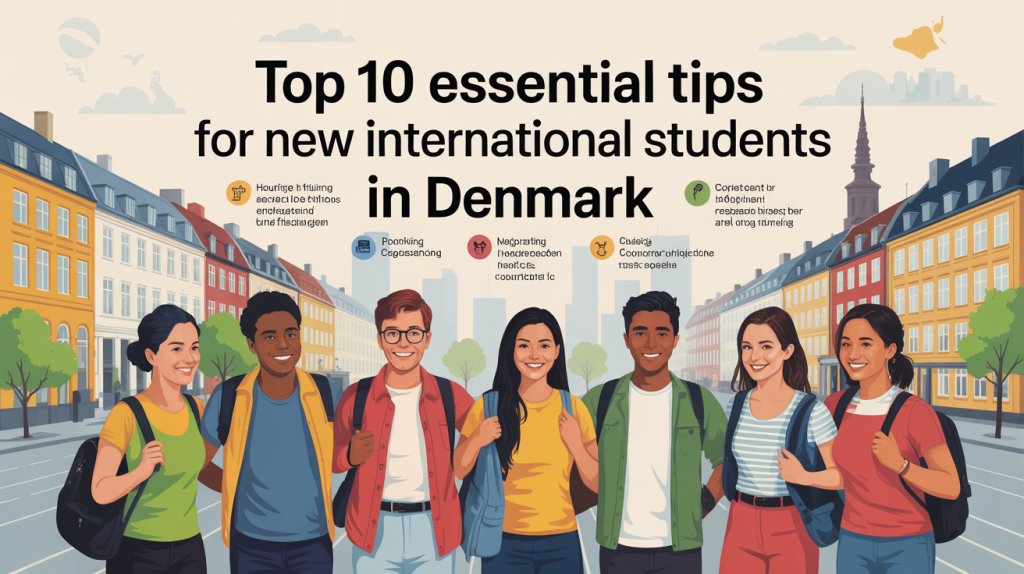
Top 10 Essential Tips for New International Students in Denmark
- Complete All Application and Visa Requirements Early
- Attend Pre-Semester Introduction Events
- Engage with Local Communities and Seek Support
- Secure Health Insurance
- Prepare Financially
- Get a Bike and Embrace Outdoor Life
- Learn the Basics of Danish Culture
- Connect with Student Organizations
- Familiarize Yourself with University Systems
- Stay Informed and Proactive
1. Complete All Application and Visa Requirements Early
The first step to studying in Denmark is to ensure you have all your application and visa requirements in order.
- Documentation:
- Letter of admission from your university.
- Academic transcripts (translated into English or Danish).
- Proof of financial means.
- Required language proficiency certificates.
- Student Visa: Non-EU/EEA students need to apply for a student visa or residence permit. This process may take up to 60 days, so it is advisable to apply well in advance to avoid any delays. Additionally, check specific requirements for your institution as they may vary.
For guidance on admission processes, explore our Study in Denmark platform.
2. Attend Pre-Semester Introduction Events
Many Danish universities offer special introduction events and language classes designed specifically for new international students.
- Benefits:
- Familiarize yourself with your new environment.
- Meet fellow students and build networks.
- Gain insights into university resources, culture, and life in Denmark.
Participating in these events is a great way to kick-start your academic journey. Check with your university about upcoming orientation activities to participate fully.
3. Engage with Local Communities and Seek Support
Building connections is vital in adapting to life in Denmark.
- Peer Interaction: Approach your Danish classmates for advice on navigating university systems, daily life, and anything specific you need help with.
- Support Networks: Utilize university resources such as counseling services, international student advisors, and student organizations.
Engaging with local communities not only helps you integrate more easily but also enhances your understanding of Danish culture.
4. Secure Health Insurance
Health insurance is mandatory for students residing in Denmark.
- Private Insurance: Before you gain access to the public healthcare system, you will need private health insurance to cover you during your initial months in Denmark.
- Public Healthcare Transition: Once you obtain your CPR number, you will be eligible for public healthcare services.
Ensure you have appropriate coverage before your arrival in Denmark, as health-related issues can be both stressful and costly if unprepared.
5. Prepare Financially
Navigating finances in a new country can be daunting.
- Proof of Solvency: You must prove financial solvency to cover living costs and study expenses. This may require providing bank statements or sponsorship letters.
- Budgeting: Create a budget that considers accommodation, food, transportation, and leisure activities. This preparation will smooth your transition and help avoid financial stress.
Understanding your financial obligations prior to arriving in Denmark is crucial to ensuring your study experience is not hindered by money matters. For tips on managing your finances, consider our resources on Living in Denmark.
6. Get a Bike and Embrace Outdoor Life
Cycling is an integral part of Danish culture and student life.
- Affordable Transportation: Getting a bike can save you money on transport while allowing you to explore your surroundings.
- Health Benefits: Incorporating outdoor activities into your daily routine can greatly enhance your overall well-being and academic performance.
Take advantage of the bike-friendly infrastructure in Denmark, and consider participating in cycling or outdoor events.
7. Learn the Basics of Danish Culture
Understanding the local culture will enable you to navigate your new environment more effectively.
- Core Concepts: Familiarize yourself with Danish social norms, values, and the concept of ‘hygge’—which promotes comfort and coziness.
- Language Opportunities: Engage in language classes and cultural activities often offered to international students to deepen your integration experience.
Considering these aspects will enrich your stay and enhance your interactions with locals.
8. Connect with Student Organizations
Getting involved in university and local student organizations can further enrich your experience.
- Diverse Opportunities: Many organizations are open to everyone, regardless of background. Joining these groups can help you connect with peers and discover a variety of social, cultural, and academic activities.
- Networking: This exposure is invaluable, not only for socializing but also for potential professional networking.
Search for student organizations at your university and consider how you can actively participate.
9. Familiarize Yourself with University Systems
Every university has unique systems and platforms that can be complex, especially when some communications may be in Danish.
- Navigational Assistance: Do not hesitate to ask for help in learning how to use online platforms, intranets, or local tools such as MitID.
- Resources: Utilize the available resources such as student handbooks, online tutorials, or faculty assistance to maximize your academic journey.
Taking the initiative to understand your institution’s procedures will set you up for success.
10. Stay Informed and Proactive
Being aware of university announcements and deadlines is essential to your academic success.
- Engagement: Take the initiative to participate in events, seek assistance when needed, and stay engaged with your studies and wider student life.
- Updates: Regularly check your university’s website and other communication channels for important information.
Proactivity in addressing your academic and personal needs will enhance your overall study experience in Denmark.
Take the Next Step with Study in Denmark
We invite you to explore further and unlock your potential in a world-class educational environment.

