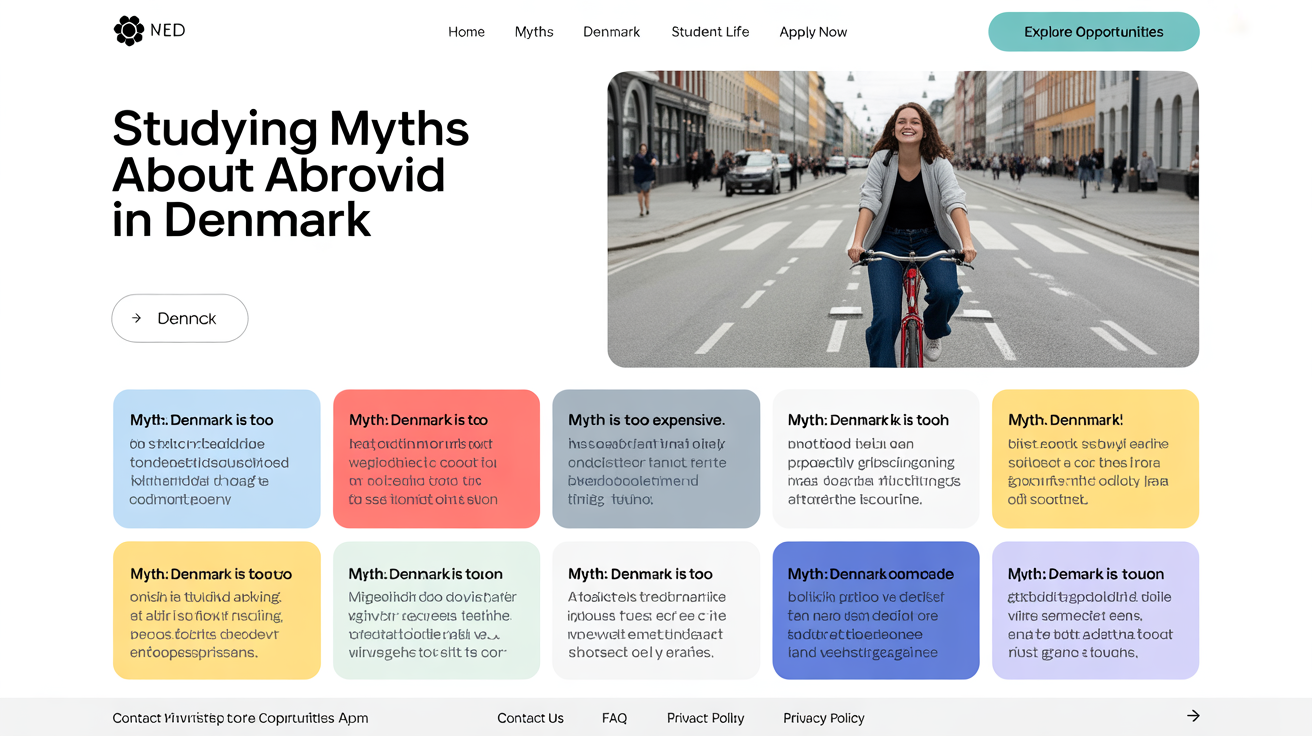
Top 10 Study Abroad Myths About Denmark Debunked
- Understanding Misconceptions in International Education
- Myth 1: All Courses Are Taught in Danish
- Myth 2: It’s Impossible to Get Accepted Without Danish Qualifications
- Myth 3: Denmark Is Too Expensive for International Students
- Myth 4: There Are No Scholarships for International Students
- Myth 5: Student Life in Denmark Is Dull
- Myth 6: It’s Hard to Find Accommodation
- Myth 7: Part-Time Jobs Are Unavailable for International Students
- Myth 8: Danish Degrees Are Not Recognized Internationally
- Myth 9: The Danish Language Is Required for Study and Daily Life
- Myth 10: The Visa Process for Non-EU Students Is Overly Complicated
- The Reality of Studying in Denmark
- Conclusion: Take the Next Step in Student Recruitment
Understanding Misconceptions in International Education
Many international students and recruiters may hesitate to consider Denmark as a destination for higher education due to common misunderstandings about the Danish educational system. By addressing these myths, we hope to better inform student placement agencies, admissions teams, and HR professionals about the opportunities available in Denmark.
Myth 1: All Courses Are Taught in Danish
In reality, higher education institutions in Denmark offer a wide range of programs—both full degrees and exchange options—taught entirely in English. This accessibility opens doors for students from diverse backgrounds who wish to enrich their academic portfolios in an internationally recognized educational environment.
Myth 2: It’s Impossible to Get Accepted Without Danish Qualifications
However, Denmark welcomes international applicants with qualifications recognized as equivalent to Danish upper secondary school certificates. The Danish application process is designed to be inclusive, with universities providing guidance and support at every stage, making it feasible for students from various educational backgrounds to gain admission.
Myth 3: Denmark Is Too Expensive for International Students
While it's true that Denmark has a higher cost of living compared to many other countries, this perception overlooks several financial aids available for international students. Discounts on public transport, affordable student accommodation, and various scholarships significantly lessen the financial burden. For example, financial support is available for students especially from the EU/EEA and Switzerland, enhancing Denmark’s viability as a cost-effective study destination.
Myth 4: There Are No Scholarships for International Students
Contrary to the belief that scholarships are unavailable, numerous Danish institutions and organizations offer financial support to international students. Scholarships may include tuition waivers and cover living expenses, allowing students from non-EU/EEA countries to study in Denmark without excessive financial strain.
Myth 5: Student Life in Denmark Is Dull
The notion that student life in Denmark lacks vibrancy is inaccurate. Danish universities pride themselves on offering a rich campus life characterized by student associations, sports clubs, cultural events, and an inclusive international community.
Myth 6: It’s Hard to Find Accommodation
While securing housing may be competitive in larger cities like Copenhagen and Aarhus, Danish universities typically assist international students in finding suitable accommodations. Options include student halls of residence (kollegier), shared apartments, and private rentals.
Myth 7: Part-Time Jobs Are Unavailable for International Students
In fact, students from the EU/EEA and Switzerland can work without restrictions, and non-EU/EEA students are permitted to work part-time—up to 20 hours a week during their studies and full-time during the summer months.
Myth 8: Danish Degrees Are Not Recognized Internationally
Danish higher education is globally respected for its rigorous academic standards and innovative teaching methods. Danish degrees are internationally recognized and help prepare graduates for careers worldwide.
Myth 9: The Danish Language Is Required for Study and Daily Life
While learning Danish can enhance the social experience, many Danes speak fluent English. Therefore, while it is beneficial to learn some Danish, it is not a requirement for succeeding academically or integrating into society.
Myth 10: The Visa Process for Non-EU Students Is Overly Complicated
Fortunately, Denmark provides comprehensive guidelines and support for non-EU/EEA students navigating the visa and residence permit application process. Universities often assist applicants, ensuring that they have the information and resources necessary to comply with legal requirements for studying in Denmark.
The Reality of Studying in Denmark
By addressing and debunking these top myths, it becomes clear that Denmark offers a welcoming, inclusive, and supportive environment for international students. The Danish higher education system is not only accessible but also enriched with diverse experiences, fostering academic and personal growth.
Conclusion: Take the Next Step in Student Recruitment
As a premier education platform, Study in Denmark is dedicated to helping international students navigate the educational opportunities in Denmark. We invite education professionals, agencies, and recruiters to partner with us in promoting awareness and facilitating successful future studies in Denmark.
Take the Next Step with Study in Denmark
Explore more about studying in Denmark and discover the resources and support we offer.
- FAQs
- Programs
- Information for Students